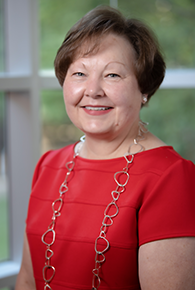
Shelby Lassiter
Director, Patient Safety & Quality Improvement
call
email

Applications for the NC-PCC Learning and Action Network (LAN) are now closed. Applicants will be notified of decisions in early November.
Supported through The Leon Levine Foundation, this four-year initiative (2026-2029) is designed to strengthen collaboration between hospitals and Federally Qualified Health Centers (FQHCs). By aligning the complementary roles of North Carolina hospitals and FQHCs in primary, preventive, specialty, and emergency services, this initiative aims to expand access to care, especially for underserved communities. Building on successful partnerships already operating in North Carolina, the North Carolina Healthcare Foundation (NCHF), is engaging both strong, existing hospital–FQHC collaborations and emerging partnerships to deepen coordination, share data, explore sustainable funding and reimbursement models, and identify the core elements that drive improved outcomes and cost savings.
By studying and supporting these sites through a structured collaboration, the initiative seeks to create replicable models that enhance care coordination, address non-medical drivers of health, improve quality, reduce cost, and ultimately strengthen the healthcare safety net statewide.
Additional information about this initiative can be found on the one pager or learn more by watching a recording from the recent informational session.
Fragmented healthcare systems are ubiquitous and often lead to:
This project supports select FQHC–hospital partnerships across the state to strengthen and further advance their collaboration to strengthen the safety net for vulnerable populations. Learning from this program will be shared statewide to inform and scale success.
The project will support creation of more seamless care networks by:
The NC-PCC began a year of learning in 2026 (Phase 1), working with partners to examine the hospital-FQHC partnership landscape, both nationally and in North Carolina. Using this learning, subsequent phases are in development.
In 2027 (Phase 2), the program will focus on five (5) targeted partnerships (dyads) between hospitals and FQHCs most positioned for impact. Through their implementation assistance framework, the NCHF will support participating healthcare organizations in strengthening and evolving sustainable, patient-centered partnership models across the care continuum. These hospital-FQHC dyads will be invited to participate in a Learning and Action Network (LAN), giving them access to:
In Phases 3 and 4 of the program, 2028-2029, participation will open to include all FQHCs and hospitals in the state eager to implement best practices in a Learning Community, building on insights from the initial five LAN dyads. Partners will collaborate on self-selected projects designed to streamline care delivery, enhance patient outcomes, and reduce costs. NCHF will collaborate with a research partner, the UNC Cecil G. Sheps Center for Health Services Research, to design and execute a robust evaluation framework for the program, ensuring implemented practices are measured for effectiveness and impact.
Hospital-FQHC dyads will be invited to participate in a joint application process which opens on 8/24/26 and closes on 9/25/26. Applications will be reviewed using defined criteria that assess the strength and readiness of each partnership. The five dyads selected for the initial cohort will be those determined to be best positioned to benefit from targeted support and generate learning that can be shared statewide. Criteria for application scoring and selection can be found here. When reviewing applications and selecting participants, the review team will also consider:
Together, these diverse factors foster a rich learning environment suitable for developing a scalable model to advance the state.
Dyads that apply but are not selected for the initial cohort will remain important partners in the initiative and will be invited to participate in key educational offerings throughout the LAN and then a broader Learning Community beginning in 2028, where they can fully access shared learning, resources, and best practices emerging from the LAN.
Applications are welcome from partnerships at any stage, whether newly emerging or formally established with a track record of success. Formal partnership contracts are not a requirement. The most critical driver of LAN participation is a unified commitment to collaborate on goals that guarantee consistent access to safe, high-quality, and affordable health care. Therefore, there must be an existing relationship between partners and a strong commitment at the leadership level to collaboratively identify and execute shared goals.
Yes, such partnerships would add value to the LAN, so please apply in collaboration with all partners.
Yes. Up to $87,500 per year for two years (2027 and 2028) will be available to the five (5) FQHC sites, disbursed at the beginning of each implementation year. Funding is intended to support staffing positions such as care coordinator, referral manager, community health worker, RN manager, licensed clinical social worker, etc. If staffing mix is deemed adequate, these funds may be used to support other needed resources in alignment with shared goals of the hospital-FQHC dyad and the NC-PFCC program.
Because the FQHC holds 501(c)(3) status, grant funds will be distributed directly to them. However, these funds must be used to support shared partnership goals. Both the FQHC and hospital partner are expected to develop the budget together, and a joint budget plan is required as part of the application.
Of important note, sustainability will be a central focus of our LAN efforts. Recognizing that securing long-term resources is essential, the NCHF Team will collaborate with LAN dyads to build a strong business case for sustaining grant-funded staff and/or resources beyond 2028. By leveraging partnership data and guidance from the NCHF Return on Investment Advisory Team, LAN dyads will be equipped with the insights and evidence needed to sustain their impact well after the program concludes.
Contact:
Shelby Lassiter, RN, BSN, CPHQ
Director, Patient Safety & Quality
North Carolina Healthcare Foundation
919-677-4134
Director, Patient Safety & Quality Improvement

Senior Program Manager, Clinical Implementation